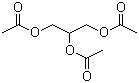
Triacetin (CAS 102-76-1), also called glyceryl triacetate, is the triester formed when all three hydroxyl groups of glycerol are acetylated. PubChem gives the formula C9H14O6 and molecular weight 218.20. The transformation converts highly hydrogen-bonding glycerol into a neutral, mobile ester liquid with useful solvent and plasticizing properties. Triacetin has a remarkably broad practical history. FDA food records list it as a flavoring adjunct, formulation aid, humectant, solvent or vehicle, and other technical functions, and it is affirmed for food use under specified regulations. It is also used as a pharmaceutical excipient and as a plasticizer in polymer and cellulose applications. Its versatility comes from a simple structural balance: three ester groups retain polarity, while acetylation suppresses glycerol's strongly hydrophilic hydroxyl behavior.
Chemical identity is more than a name. Closely related salts, isomers, hydrates, metabolites, intermediates, and final products can have different registry numbers and different physical or biological behavior. For a chemical database, keeping those forms separate prevents a property measured for one substance from being silently assigned to another.
Synthesis also depends on chemoselectivity. A useful intermediate contains functional groups that can be transformed in a predictable order, allowing chemists to build complexity while protecting parts of the molecule that must remain unchanged. This is why apparently modest building blocks can be important in medicinal, materials, or process chemistry even when they never appear in a finished product.
Analytical control is the other half of synthesis. Identity, purity, water or salt content, stereochemistry, and process-related impurities may all matter to reproducibility. Reference standards and well-characterized intermediates therefore have value beyond their immediate reaction step: they allow laboratories to confirm that a route is producing the intended chemical entity.
A responsible Chemical Story separates documented application from structural possibility. Familiar motifs can suggest hypotheses, but structural resemblance alone does not prove pharmacological activity, industrial adoption, or regulatory status. Where exact-CAS literature is sparse, the scientifically useful approach is to describe verified chemistry and stop before speculation becomes a claimed fact.
Chemical identity is more than a name. Closely related salts, isomers, hydrates, metabolites, intermediates, and final products can have different registry numbers and different physical or biological behavior. For a chemical database, keeping those forms separate prevents a property measured for one substance from being silently assigned to another.
Synthesis also depends on chemoselectivity. A useful intermediate contains functional groups that can be transformed in a predictable order, allowing chemists to build complexity while protecting parts of the molecule that must remain unchanged. This is why apparently modest building blocks can be important in medicinal, materials, or process chemistry even when they never appear in a finished product.
Analytical control is the other half of synthesis. Identity, purity, water or salt content, stereochemistry, and process-related impurities may all matter to reproducibility. Reference standards and well-characterized intermediates therefore have value beyond their immediate reaction step: they allow laboratories to confirm that a route is producing the intended chemical entity.
A responsible Chemical Story separates documented application from structural possibility. Familiar motifs can suggest hypotheses, but structural resemblance alone does not prove pharmacological activity, industrial adoption, or regulatory status. Where exact-CAS literature is sparse, the scientifically useful approach is to describe verified chemistry and stop before speculation becomes a claimed fact.
References:
1. PubChem. Triacetin, CID 5541.
2. U.S. FDA. Substances Added to Food: Triacetin (Glycerol Triacetate), CAS 102-76-1.
3. Cosmetic Ingredient Review. Safety assessment of triacetin.
|





 chemBlink Chemical Story