
Online Database of Chemicals from Around the World
| Simagchem Corporation | China | |||
|---|---|---|---|---|
 | www.simagchem.com | |||
 | +86 13806087780 | |||
 | +86 (592) 268-0237 | |||
 | sale@simagchem.com | |||
| Chemical manufacturer since 2002 | ||||
| chemBlink Standard supplier since 2008 | ||||
| Shanghai Amino-Chem Co., Ltd. | China | |||
|---|---|---|---|---|
| www.amino-chem.cn | |||
| +86 (21) 5030-6558 | |||
| +86 (21) 5030-6881 | |||
| stepheni@amino-chem.cn market@amino-chem.cn | |||
| Chemical manufacturer | ||||
| chemBlink Standard supplier since 2009 | ||||
| Zhejiang Qucheng Chemical Co., Ltd. | China | |||
|---|---|---|---|---|
| www.quchengchem.com.cn | |||
| +86 18857937887 | |||
| qucheng@quchenggroup.com | |||
| Chemical manufacturer | ||||
| chemBlink Standard supplier since 2010 | ||||
| Hefei TNJ Chemical Industry Co., Ltd. | China | |||
|---|---|---|---|---|
| www.tnjchem.com | |||
| +86 (551) 6541-8684 | |||
| +86 (551) 6541-8697 | |||
| sales@tnjchem.com | |||
| Chemical manufacturer since 2001 | ||||
| chemBlink Standard supplier since 2010 | ||||
| BOC Sciences | USA | |||
|---|---|---|---|---|
| www.bocsci.com | |||
| +1 (631) 485-4226 | |||
| +1 (631) 614-7828 | |||
| info@bocsci.com | |||
| Chemical manufacturer | ||||
| chemBlink Standard supplier since 2010 | ||||
| Qingdao Lotus International Trading Co., Ltd. | China | |||
|---|---|---|---|---|
| www.lotuschemical.cn | |||
| +86 (532) 6776-9016 | |||
| +86 (532) 6773-0450 | |||
| lotuschemical02@gmail.com | |||
| Chemical distributor since 2002 | ||||
| chemBlink Standard supplier since 2013 | ||||
| Shanxi Wencheng Chemicals Co., Ltd. | China | |||
|---|---|---|---|---|
| www.wenchengchem.com | |||
| +86 (351) 799-1193 | |||
| wenchengchem01@163.com | |||
| Chemical distributor since 2001 | ||||
| chemBlink Standard supplier since 2014 | ||||
| Riverland Trading LLC. | USA | |||
|---|---|---|---|---|
| www.riverlandtrading.com | |||
| +1 (336).944-2293 | |||
| bens@riverlandtrading.com | |||
| Chemical distributor | ||||
| chemBlink Standard supplier since 2023 | ||||
| Mudanjiang Fengda Chemicals Import and Export Co., Ltd. | China | |||
|---|---|---|---|---|
| www.mudanjiangchem.com | |||
| +86 (453) 625-5887 | |||
| +86 (453) 629-6887 / 622-3551 | |||
| fengda@mudanjiangchem.com | |||
 | WeChat: fengdachem | |||
 | WhatsApp:+8615645398875 | |||
| Chemical distributor since 1995 | ||||
| chemBlink Standard supplier since 2026 | ||||
| Hong Kong Yuxing Industrial Co., Limited | China | |||
|---|---|---|---|---|
| yuxingchem.com | |||
| +86 17734807625 | |||
| info@yuxingchem.com | |||
| Chemical distributor since 2025 | ||||
| chemBlink Standard supplier since 2026 | ||||
| ProChem, Inc. | USA | |||
|---|---|---|---|---|
| www.prochemonline.com | |||
| +1 (815) 398-1788 | |||
| +1 (815) 398-1810 | |||
| prochem3@aol.com | |||
| Chemical manufacturer since 1986 | ||||
| Santa Cruz Biotechnology, Inc. | USA | |||
|---|---|---|---|---|
| www.scbt.com | |||
| +1 (831) 457-3800 | |||
| +1 (831) 457-3801 | |||
| scbt@scbt.com | |||
| Chemical manufacturer | ||||
| Thermo Fisher Scientific | USA | |||
|---|---|---|---|---|
| www.fishersci.com | |||
| +1 (800) 766-7000 | |||
| +1 (800) 926-1166 | |||
| fs.order@thermofisher.com | |||
| Chemical manufacturer | ||||
| Strem Chemicals, Inc. | USA | |||
|---|---|---|---|---|
| www.strem.com | |||
| +1 (978) 499-1600 | |||
| +1 (978) 465-3104 | |||
| info@strem.com | |||
| Chemical manufacturer | ||||
| Chemos GmbH & Co. KG | Germany | |||
|---|---|---|---|---|
| www.chemos.de | |||
| +49 871-966346-0 | |||
| +49 871-966346-13 | |||
| chemos@chemos.de | |||
| Chemical distributor | ||||
| Avonchem/Chromos Express Ltd. | UK | |||
|---|---|---|---|---|
| www.avonchem.co.uk | |||
| +44 (1625) 434-300 | |||
| +44 (1625) 869-777 | |||
| info@avonchem.co.uk | |||
| Chemical manufacturer | ||||
| Punjab Chemicals & Crop Protection Limited | India | |||
|---|---|---|---|---|
| www.punjabchemicals.com | |||
| +91 (22) 2674-7900 | |||
| +91 (22) 2673-6193 / 2673-6178 | |||
| pharmainfo@punjabchemicals.com | |||
| Chemical manufacturer since 1975 | ||||
| Classification | API >> Special medicine >> Antidote |
|---|---|
| Name | Sodium nitrite |
| Molecular Structure | 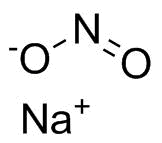 |
| Molecular Formula | NaNO2 |
| Molecular Weight | 68.99 |
| CAS Registry Number | 7632-00-0 |
| EC Number | 231-555-9 |
| SMILES | N(=O)[O-].[Na+] |
| Density | 2.168 g/mL (Expl.) |
|---|---|
| Melting point | 271 °C (Expl.) |
| Boiling point | 320 °C (Decomposes) (Expl.) |
| Solubility | water: 820 g/L (20 °C) (Expl.) |
| Hazard Symbols |    GHS03;GHS06;GHS09 Danger Details GHS03;GHS06;GHS09 Danger Details | ||||||||||||||||||||||||||||||||||||||||||||||||||||||||||||||||||||||||||||||||||||
|---|---|---|---|---|---|---|---|---|---|---|---|---|---|---|---|---|---|---|---|---|---|---|---|---|---|---|---|---|---|---|---|---|---|---|---|---|---|---|---|---|---|---|---|---|---|---|---|---|---|---|---|---|---|---|---|---|---|---|---|---|---|---|---|---|---|---|---|---|---|---|---|---|---|---|---|---|---|---|---|---|---|---|---|---|---|
| Risk Statements | H272-H301-H400 Details | ||||||||||||||||||||||||||||||||||||||||||||||||||||||||||||||||||||||||||||||||||||
| Safety Statements | P210-P220-P264-P270-P273-P280-P301+P316-P321-P330-P370+P378-P391-P405-P501 Details | ||||||||||||||||||||||||||||||||||||||||||||||||||||||||||||||||||||||||||||||||||||
| Hazard Classification | |||||||||||||||||||||||||||||||||||||||||||||||||||||||||||||||||||||||||||||||||||||
| |||||||||||||||||||||||||||||||||||||||||||||||||||||||||||||||||||||||||||||||||||||
| Transport Information | UN 1487; UN 1487; UN 1500 | ||||||||||||||||||||||||||||||||||||||||||||||||||||||||||||||||||||||||||||||||||||
| SDS | Available | ||||||||||||||||||||||||||||||||||||||||||||||||||||||||||||||||||||||||||||||||||||
 chemBlink Chemical Story
|
Sodium nitrite, CAS 7632-00-0, is an inorganic salt with the formula NaNO2. It is a white to slightly yellowish crystalline solid, highly soluble in water, and an important industrial and laboratory chemical. Yet one of its most familiar effects can be seen at the breakfast table: sodium nitrite is closely connected with the characteristic pink color of cured meats such as ham, bacon, and many sausages. This color presents an interesting chemical puzzle. Ordinary fresh meat changes color when heated. Its principal red pigment, myoglobin, contains an iron-bearing heme group whose chemical state and surrounding ligands strongly influence color. During cooking, myoglobin is altered and denatured, and untreated meat generally loses its fresh red appearance and becomes brownish or gray. Cured ham behaves differently. Even after cooking, it can retain a remarkably stable pink color. Sodium nitrite is not itself a pink dye. Instead, it initiates a sequence of reactions that changes the chemistry of myoglobin. When nitrite enters the mildly acidic and chemically reducing environment of meat, part of it can ultimately give rise to nitric oxide, NO. Nitric oxide is a small molecule with a strong affinity for the iron center of heme proteins. It can bind to myoglobin and form nitrosylmyoglobin, producing the characteristic color associated with cured meat. Heating then denatures the protein portion of the pigment, but the nitric-oxide-containing heme system can be converted into a relatively heat-stable pink pigment commonly described as nitrosyl hemochrome. This is why cooked cured ham can remain pink while an otherwise similar piece of uncured cooked pork becomes gray-brown. The transformation is a striking example of how color can arise from coordination chemistry. The sodium nitrite added to meat is essentially colorless in the amount used. The visible pink color appears because a small molecule derived from nitrite changes the environment around an iron atom already present inside the meat's natural pigment. Color, however, is only part of the reason nitrite became important in meat curing. It also helps inhibit the growth and toxin production of Clostridium botulinum, the bacterium responsible for botulism. This is particularly important in certain cured products because low-oxygen conditions, including those found in some packaged foods, can favor organisms capable of anaerobic growth. Botulinum toxin is extraordinarily potent, so controlling C. botulinum has historically been a major concern in preserved meats. Nitrite acts together with salt, temperature control, acidity, processing conditions, and other preservation factors rather than functioning as a complete sterilizing agent by itself. Modern cured-meat safety therefore depends on a system of barriers, with nitrite serving as one important component. Nitrite also contributes to oxidative stability and the characteristic flavor of cured meat. Iron released or altered during meat storage can promote lipid oxidation, leading to rancid flavors and odors. Nitrite-derived chemistry can interfere with some of these oxidative processes. The familiar sensory character of cured meat is therefore the combined result of pigment chemistry, oxidation chemistry, microbial control, and reactions involving numerous components of the food. The same reactivity that makes nitrite useful also creates an important chemical concern. Under suitable conditions, nitrite-derived species can react with certain amines to form N-nitroso compounds, including nitrosamines. Some nitrosamines are carcinogenic, and concern about their formation became particularly important in the twentieth-century evaluation of cured foods. This led to an interesting example of chemistry being used to control the side effects of other chemistry. Ascorbic acid, erythorbic acid, and their salts can be incorporated into curing systems. Besides accelerating desirable curing reactions, these reducing agents help suppress nitrosamine formation. In some cured-meat processes their use is therefore part of the strategy for obtaining the useful effects of nitrite while limiting undesirable reactions. The amount of nitrite used in food is consequently controlled rather than arbitrary. Food regulations specify permitted applications and conditions of use, and commercial curing formulations are designed so that small and controlled quantities can be distributed uniformly through the product. Concentrated sodium nitrite itself is not something to be casually substituted for properly formulated curing mixtures. Nitrite chemistry also extends far beyond food. The nitrite ion participates readily in oxidation-reduction and nitrogen chemistry and is used in chemical synthesis, analytical chemistry, metal treatment, and other industrial processes. Under different conditions it can be oxidized toward nitrate or reduced to nitrogen-containing species of lower oxidation state. Its relationship with nitric oxide is especially interesting because NO is not merely a meat-curing intermediate. Nitric oxide is also a biological signaling molecule produced naturally in the human body, where it participates in processes including regulation of blood-vessel tone. The chemistry of nitrogen oxides therefore spans food technology, inorganic chemistry, microbiology, and physiology. Sodium nitrite also demonstrates why chemical safety cannot be inferred simply from whether a substance has a useful application. In concentrated or excessive amounts, nitrite is toxic. One important mechanism involves oxidation of the iron in hemoglobin from its normal Fe2+ state toward Fe3+, producing methemoglobin, which cannot transport oxygen in the same way as normal hemoglobin. Significant methemoglobinemia can therefore interfere with oxygen delivery to tissues. This creates a remarkable contrast. In cured meat, nitrite-derived chemistry involving an iron-containing protein helps create an attractive and stable pink color. In blood, excessive nitrite-related oxidation of another iron-containing protein can impair its essential biological function. Myoglobin and hemoglobin are different proteins, but iron chemistry lies near the center of both stories. Sodium nitrite is therefore much more interesting than the label "food preservative" suggests. It helps inhibit a dangerous bacterium, changes the chemistry of a natural meat pigment, contributes to oxidative stability, and participates in reactions that must be carefully controlled to limit unwanted products. A slice of pink cured ham is consequently a small demonstration of inorganic and biological chemistry. Sodium nitrite did not simply color the meat. It set nitrogen chemistry in motion, generated species capable of interacting with iron, and changed the molecular state of a pigment that was already there. The color on the plate is the visible result of chemistry happening around a single metal atom. References 1. U.S. Food and Drug Administration. Substances Added to Food: Sodium Nitrite, CAS 7632-00-0. Regulatory status and technical functions including antimicrobial, antioxidant, and color-related uses. 2. U.S. Department of Agriculture, Food Safety and Inspection Service. Clostridium botulinum and Botulism. Nitrite use in cured meat and inhibition of Clostridium botulinum. 3. U.S. Department of Agriculture, Food Safety and Inspection Service. Bacon and Food Safety. Nitrite in cured-meat color, preservation, and control of nitrosamine formation. 4. Published food-chemistry literature on nitrite conversion to nitric oxide, nitrosylmyoglobin formation, and formation of heat-stable cured-meat pigments. 5. Published toxicological literature on nitrite, methemoglobin formation, and N-nitroso compounds. |
| Market Analysis Reports |