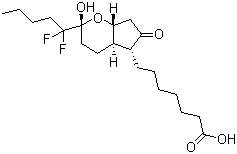
Lubiprostone is a synthetic bicyclic fatty acid derivative classified as a prostaglandin E1 (PGE1) analog, developed to treat chronic constipation, irritable bowel syndrome with constipation (IBS-C), and opioid-induced constipation in adults. It was discovered as part of research into prostaglandin derivatives capable of modulating ion transport in epithelial cells without producing the systemic effects associated with native prostaglandins. Its mechanism of action involves the selective activation of type 2 chloride channels (ClC-2) in the apical membrane of gastrointestinal epithelial cells, which promotes chloride ion secretion into the intestinal lumen. This chloride movement osmotically draws water into the lumen, softening stool and increasing intestinal motility.
The discovery of lubiprostone followed structure–activity relationship studies of prostaglandin E1 analogs aimed at enhancing local gastrointestinal activity while minimizing systemic absorption. Lubiprostone’s chemical design includes a bicyclic structure with hydroxyl groups strategically positioned to maintain chloride channel activity and selectivity. Pharmacokinetic studies show minimal systemic exposure following oral administration, as the compound acts locally in the gastrointestinal tract. Its metabolism is primarily via oxidation and reduction in the stomach and intestine, and the drug is excreted mostly in feces.
Clinical development included preclinical studies demonstrating chloride secretion in epithelial cell models and animal models of constipation. Electrophysiological studies confirmed that lubiprostone stimulates chloride currents independently of cyclic AMP pathways, differentiating it mechanistically from other secretagogues that act through CFTR channels. These findings supported its use as a locally acting intestinal secretagogue without significant cardiovascular or systemic prostaglandin effects.
Randomized, double-blind, placebo-controlled clinical trials confirmed lubiprostone’s efficacy in improving spontaneous bowel movement frequency, stool consistency, and patient-reported outcomes. In patients with chronic idiopathic constipation, lubiprostone increased the number of complete spontaneous bowel movements per week, reduced straining, and alleviated abdominal discomfort. Similar studies in IBS-C demonstrated symptom improvement in women, including relief from bloating and abdominal pain. For opioid-induced constipation, lubiprostone also improved bowel habits in patients receiving chronic opioid therapy without altering opioid analgesia.
Lubiprostone is generally well tolerated, with the most common adverse effects being nausea and diarrhea. Other less frequent effects include headache and abdominal distension. Its localized mechanism of action contributes to a favorable safety profile compared with systemic prostaglandin analogs. Lubiprostone’s development established a precedent for the design of prostaglandin derivatives that target epithelial ion channels rather than classical prostanoid receptors, expanding therapeutic options for constipation-related disorders.
References
Cuppoletti J, Malinowska DH, Tewari KP, Li QJ, Sherry AM, Patchen ML, Ueno R (2004) SPI-0211 activates T84 cell chloride transport and recombinant human ClC-2 chloride currents. American Journal of Physiology - Cell Physiology 287 C1173–C1183 DOI: 10.1152/ajpcell.00528.2003
Camilleri M, Bharucha AE, Ueno R, Burton D, Thomforde GM, Baxter K, McKinzie S, Zinsmeister AR (2006) Effect of a selective chloride channel activator, lubiprostone, on gastrointestinal transit, gastric sensory, and motor functions in healthy volunteers. American Journal of Physiology - Gastrointestinal and Liver Physiology 290 G942–G947 DOI: 10.1152/ajpgi.00264.2005
Bassil AK, Borman RA, Jarvie EM, McArthur-Wilson RJ, Weston J, Lee K, Sanger GJ (2008) Activation of prostaglandin EP receptors by lubiprostone in rat and human stomach and colon. British Journal of Pharmacology 154 126–135 DOI: 10.1038/bjp.2008.84
|







 GHS07 Warning Details
 chemBlink Chemical Story