
Online Database of Chemicals from Around the World
| Simagchem Corporation | China | |||
|---|---|---|---|---|
 | www.simagchem.com | |||
 | +86 13806087780 | |||
 | +86 (592) 268-0237 | |||
 | sale@simagchem.com | |||
| Chemical manufacturer since 2002 | ||||
| chemBlink Standard supplier since 2008 | ||||
| Hefei TNJ Chemical Industry Co., Ltd. | China | |||
|---|---|---|---|---|
| www.tnjchem.com | |||
| +86 (551) 6541-8684 | |||
| +86 (551) 6541-8697 | |||
| sales@tnjchem.com | |||
| Chemical manufacturer since 2001 | ||||
| chemBlink Standard supplier since 2010 | ||||
| BOC Sciences | USA | |||
|---|---|---|---|---|
| www.bocsci.com | |||
| +1 (631) 485-4226 | |||
| +1 (631) 614-7828 | |||
| info@bocsci.com | |||
| Chemical manufacturer | ||||
| chemBlink Standard supplier since 2010 | ||||
| Tetrahedron Scientific Inc. | China | |||
|---|---|---|---|---|
| www.thsci.com | |||
| +86 (571) 8848-9473 +86 18072878644 | |||
| +86 (571) 8848-9473 | |||
| sales@thsci.com | |||
| Chemical manufacturer | ||||
| chemBlink Standard supplier since 2011 | ||||
| Riverland Trading LLC. | USA | |||
|---|---|---|---|---|
| www.riverlandtrading.com | |||
| +1 (336).944-2293 | |||
| bens@riverlandtrading.com | |||
| Chemical distributor | ||||
| chemBlink Standard supplier since 2023 | ||||
| Mudanjiang Fengda Chemicals Import and Export Co., Ltd. | China | |||
|---|---|---|---|---|
| www.mudanjiangchem.com | |||
| +86 (453) 625-5887 | |||
| +86 (453) 629-6887 / 622-3551 | |||
| fengda@mudanjiangchem.com | |||
 | WeChat: fengdachem | |||
 | WhatsApp:+8615645398875 | |||
| Chemical distributor since 1995 | ||||
| chemBlink Standard supplier since 2026 | ||||
| Wuhan Hongxin Chemical Industry Co., Ltd. | China | |||
|---|---|---|---|---|
| www.hongxin-chem.cn | |||
| +86 (27) 8485-5955 +86 13871391066 | |||
| +86 (27) 8485-5956 | |||
| hongxinchem@hongxin-chem.cn | |||
| Chemical manufacturer | ||||
| Classification | Inorganic chemical industry >> Inorganic salt >> Phosphides, metal phosphoric acid, metaphosphoric acid, hypophosphorous acid and pyrophosphate |
|---|---|
| Name | Sodium hypophosphite monohydrate |
| Synonyms | Sodium hypophosphite |
| Molecular Structure | 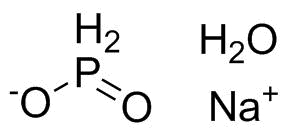 |
| Molecular Formula | NaH2PO2.H2O |
| Molecular Weight | 105.99 |
| CAS Registry Number | 10039-56-2 |
| EC Number | 600-090-7 |
| SMILES | O.[Na+].[O-][PH2]=O |
| Melting point | 90 °C (Expl.) |
|---|---|
| Solubility | water: 100 mg/mL (Expl.) |
| Safety Statements | S24/25 Details |
|---|---|
| SDS | Available |
 chemBlink Chemical Story
|
Sodium hypophosphite monohydrate, CAS 10039-56-2, is the monohydrate of sodium hypophosphite, an inorganic reducing agent with the formula NaH2PO2·H2O and a molecular weight of approximately 105.99. Although it has applications in chemical synthesis and other industrial processes, its best-known technological role is in electroless nickel plating, where it helps metal deposit on a surface without the external electric current required by conventional electroplating. The name "electroless" captures the unusual feature of the process. In ordinary electroplating, the object being coated forms part of an electrical circuit, and an external power supply supplies the electrons needed to reduce dissolved metal ions to metal. An electroless nickel bath instead contains its own chemical reducing agent. Sodium hypophosphite is one of the most widely used reducing agents for this purpose. At a suitable catalytic surface, hypophosphite is oxidized while nickel ions are reduced and deposited. Once nickel deposition has begun on an activated surface, the deposited nickel itself can help sustain further reaction, making the process autocatalytic. This distinction has important practical consequences. Electric current in an electroplating bath is not distributed uniformly over a complicated object. Edges and projections may receive more current, while recesses, holes, and less accessible regions receive less. Electroless deposition is driven instead by chemical reactions occurring at the catalytic surface, so it can produce relatively uniform coatings on complex shapes. This ability has helped make electroless nickel valuable for components where dimensional uniformity, corrosion resistance, wear resistance, or coverage of difficult geometries is important. Sodium hypophosphite does more than provide reducing power. When hypophosphite is used in an electroless nickel bath, some phosphorus is incorporated into the growing deposit, so the coating is generally a nickel-phosphorus alloy rather than pure nickel. The phosphorus content influences properties such as hardness, corrosion behavior, structure, and response to heat treatment. Bath composition and operating conditions can therefore be adjusted to produce nickel-phosphorus coatings suited to different engineering requirements. The chemistry is more complicated than a single reaction equation suggests. Hypophosphite is oxidized primarily toward phosphite species, hydrogen can be evolved, nickel ions are reduced, and competing pathways contribute phosphorus to the deposit. Several mechanistic descriptions have been proposed for these surface reactions, and the detailed mechanism has long been the subject of research. The central technological fact, however, is well established: hypophosphite supplies the reducing chemistry that permits nickel deposition without an externally imposed plating current and also contributes to formation of the characteristic nickel-phosphorus coating. This application has an interesting history. The ability of hypophosphite to reduce nickel salts was known in the nineteenth century, but modern electroless nickel technology emerged much later. During work at the U.S. National Bureau of Standards in the 1940s, Abner Brenner and Grace Riddell investigated nickel deposition systems containing reducing agents. Their work established practical autocatalytic nickel deposition using hypophosphite and helped introduce the term "electroless" for a process that could continue depositing metal chemically rather than according to the current supplied by an external circuit. A practical electroless nickel bath contains more than nickel salt and sodium hypophosphite. Complexing agents help keep nickel ions in solution and control their availability, buffers help regulate pH, and stabilizers suppress uncontrolled decomposition of the bath. Temperature and pH strongly influence deposition behavior. As plating proceeds, hypophosphite is consumed and oxidation products accumulate, so bath composition must be monitored and replenished if consistent coating properties are required. This combination of surface chemistry and process control explains why sodium hypophosphite became such an important industrial chemical. It performs a seemingly simple task—donating reducing power—but that task makes possible a coating technology fundamentally different from conventional electroplating. A properly prepared object can enter a chemical bath without being connected as an electrode, yet emerge covered with a metallic nickel-phosphorus layer. Sodium hypophosphite monohydrate therefore tells a broader story about what "plating" really means. Metal deposition does not necessarily require electricity to arrive through a wire. The required electrons can be generated chemically at the surface itself. In electroless nickel plating, a small phosphorus-containing ion performs that role, turning a solution of nickel ions into an engineering coating while contributing phosphorus to the material it helps create. References 1. U.S. Environmental Protection Agency. Development Document for Existing Source Pretreatment Standards for the Electroplating Point Source Category. Description of electroless nickel baths and sodium hypophosphite as the reducing agent. 2. Riedel, W. (2000). "Electroless nickel plating from acid bath." Surface and Coatings Technology, 123, 72-77. Discussion of hypophosphite-reduced nickel-phosphorus deposition and reaction mechanisms. 3. PubChem. Sodium hypophosphite monohydrate, CID 23708894. CAS 10039-56-2. 4. Published literature on electroless nickel-phosphorus plating and the historical development of hypophosphite-based autocatalytic nickel deposition. |
| Market Analysis Reports |